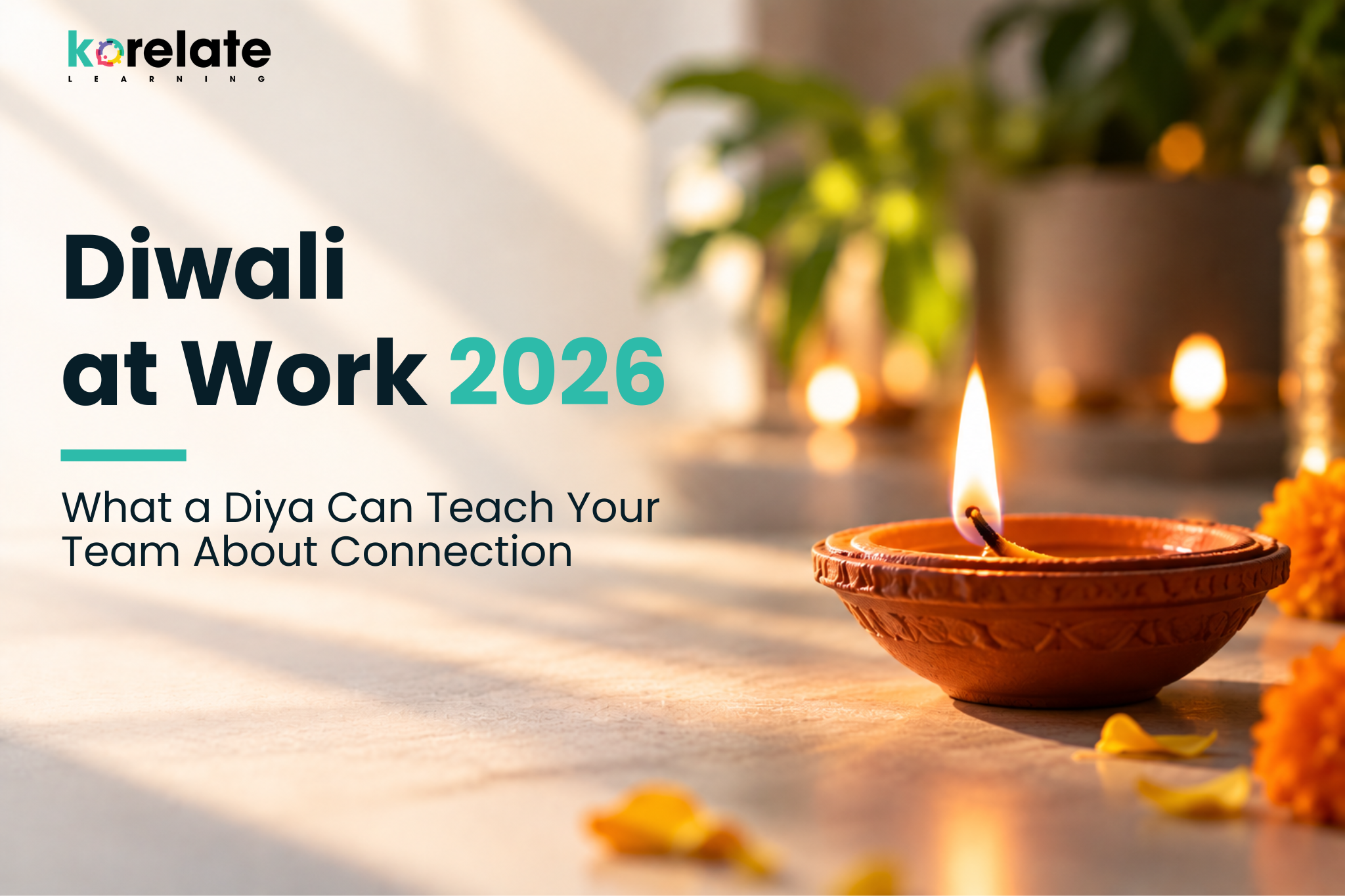
Light one diya. Just one small clay diya, not the string lights, not the LED toran. Now watch it for a full minute.
It looks simple. It isn’t. A diya runs on three things: oil, a wick, and a flame it is happy to share. Take away any one and the lamp is just pottery.
Your team runs on the same three things. Yet most offices celebrate Diwali by buying more lights. Very few ask what is actually burning inside the building.
I have spent a decade facilitating learning experiences for 8,00,000+ people, in rooms as small as ten and as large as 1,600, and my doctoral research looked at experiential learning and communication. The pattern holds everywhere: people don’t walk out lighter because of the games. They walk out lighter because someone noticed them.
Diwali falls on Sunday, 8 November 2026, just 23 days from today. Here are five lessons from the diya, each with a simple activity you can run in a single sitting.
First, an honest look at the oil
Before the lessons, a reality check. Gallup’s State of the Global Workplace 2026 report found that only 23% of Indian employees were engaged at work in 2025, the lowest in four years. A full 59% were ‘not engaged’: present on the payroll, absent in spirit. Gallup estimates that disengagement costs India around $351 billion a year, close to 9% of GDP.
Those are not festive numbers. But they are exactly why Diwali is a gift. It is the one occasion when everyone, from the intern to the CEO, already knows what the celebration means. You don’t have to sell it. You only have to design it.
Lesson 1: The oil. Know what fuels your people
A lamp without oil can’t burn, however beautiful it is. People are the same. Some things at work give them energy. Others quietly leave soot.
Try this: Oil and Soot (20 minutes). Put up two sheets. On one, everyone writes on sticky notes what gives them energy at work. On the other, what drains it. No names. Read both aloud. Then ask leadership to commit to fixing one ‘soot’ item before the year ends, and tell everyone which one.
Lesson 2: The wick. Honour the ones who hold the flame
Nobody photographs the wick. It sits there, soaked in oil, quietly doing the actual work. Every team has wicks: the colleague who fixes the late-night problem, onboards the new joiner, never asks for credit.
Try this: Wick Stories (30 minutes). Ask everyone to nominate one colleague in two handwritten lines, naming one specific thing that person did. Read them aloud. No leadership panel, no votes. The loudest applause usually goes to the person nobody expected.
Lesson 3: The flame. Light another without losing your own
A diya can light a thousand more and burn exactly as bright afterwards. Recognition works the same way. Thanking someone costs you nothing and makes both of you glow.
Try this: Pass the Flame (20 minutes). Sit in a circle with a tealight (or an LED one) each. One person lights theirs, thanks a colleague for something specific (not ‘great work’, but what they did), and lights that person’s candle. That person then thanks someone else. For remote teams, run the same chain on a call: unmute, thank, name the next person.
Lesson 4: The shadow under the lamp
There is a Hindi proverb for this: chiraag tale andhera. The darkest spot is right beneath the lamp. In offices, that lamp is often the manager. Gallup’s data shows manager engagement in India fell from 39% to 30% in 2025, a sharper drop than among individual contributors. The people carrying the light for everyone else are running low on oil themselves.
Try this: Under the Lamp (30 minutes). Collect anonymous answers to one question: what is one thing your manager could do to make your work lighter? Hand the themes to managers, and let them respond in public within a week. Then ask the managers a question of their own: what is heavy for you right now? Someone should be asking.
Lesson 5: The dots before the rangoli
Many traditional rangoli and kolam designs begin with a simple grid of dots. Same dots, endlessly different patterns. A team is a grid of dots too: the same people can produce something ordinary or something beautiful, depending on how they connect.
Try this: One Dot (40 minutes). Mark a grid of dots on the floor, or share a digital whiteboard for remote teams. Each person, drawn from different teams, adds one line or one colour, and nobody sees the whole design until the end. The pattern that emerges is rarely planned, and always shared.
A gift is not a gesture
Finance will ask about gifting, so here is the practical bit. Under the Income-tax Rules, 2026 (notified on 20 March 2026 and in force from 1 April), a gift, voucher or token from an employer is treated as nil perquisite if the total value in the tax year stays within ₹15,000. It used to be ₹5,000.
Three things to remember. The limit is cumulative across the whole year, so milestone gifts and Diwali gifts count together. It is a threshold, not a deduction, so crossing it can pull the gift into tax. And it covers gifts, vouchers and tokens, not cash. Free meals at work are now exempt up to ₹200 per meal, up from ₹50.
My advice: keep the gift modest and spend the rest on the experience. A hamper is finished in a week. A moment where someone was thanked by name is remembered in January.
I’m not a tax advisor. Please confirm with your chartered accountant before you finalise anything.
If you only have 23 days
This week, pick two or three of the five activities and decide who is included, every city and every remote colleague. Next week, brief your managers and send the invitation. Because Diwali falls on a Sunday, your celebration will most likely land between Monday 2 and Friday 6 November, so confirm the date against your holiday list. Afterwards, ask two questions: what made you feel included, and what should we do differently next year? And one more request: go light, not loud. Skip the crackers.
The last diya
On the evening before your office closes for the festival, walk the floor. Notice who is sitting alone. Notice who just joined. Notice who never asks.
That person is your real Diwali plan.
Roshni baantne se kam nahi hoti, badhti hai. Light does not shrink when it is shared. It grows.
Bring the lamp to life with Korelate Learning
You can run every activity above yourself. If you would like a facilitated experience for your teams this Diwali, here is where I would start. Each one is part of Korelate Learning’s offerings and pairs naturally with a lesson from the diya.
- For celebration energy: Musical team building. Drum circles and rhythm experiences such as Drum-Jam, Boom Beats and the Rhythm Fusion Experience need no musical experience at all.
- For giving back, the flame shared: CSR team building. Turn the festive spirit into social impact with activities like Hands of Hope, Social Chef and Pedals of Joy.
- For teams spread across cities: Virtual team building. Sessions typically run one to two hours on Zoom or Microsoft Teams. Try The Quizmaster Challenge for a Diwali quiz night or Laughter Yoga for a lighter break in a heavy week.
- For cross-team bonding in the office: Indoor team building activities. Experiences such as The Butterfly Effect and Blind Unison have helped client teams build collaboration and trust.
- For a pre-festive offsite: Outdoor team building activities. Get everyone out of the building before the holidays begin.
- For the managers carrying the lamp (Lesson 4): Leadership workshops. Experiential workshops on leadership mindset, influence and team effectiveness.
Not sure which fits your teams? Talk to a Korelate consultant about designing a Diwali experience for every city and every team, or browse the Korelate case studies to see how other organisations have done it.
Frequently asked questions
How do I make Diwali at work meaningful and not just festive? Give every activity a purpose beyond the party: recognition, listening or connection. The five activities above each run in 20 to 40 minutes and need almost no budget.
Are Diwali gifts to employees tax-free in 2026? Gifts, vouchers and tokens are treated as nil perquisite if the total for the tax year does not exceed ₹15,000. Cash is not covered, so check the treatment with your finance team.
What if my team is spread across cities? Run the same activity at the same hour. Pass the Flame works well as a chain on a call, and One Dot works on a shared digital whiteboard.
When is Diwali in 2026? Lakshmi Puja falls on Sunday, 8 November 2026. Dhanteras is on Friday, 6 November, and Bhai Dooj on Tuesday, 10 November.
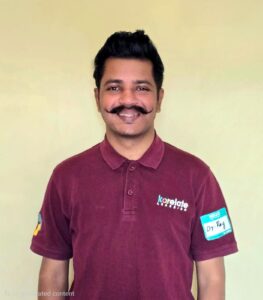
Dr. Kalyan Srinivas Raygalla (Dr. Ray) is an award-winning facilitator, educationist, author, and TEDx speaker who has impacted over 8 lakh people through experiential learning, leadership development, and organisational workshops. With a PhD in Communication and Organisational Psychology and experience across academia, journalism, and storytelling, he creates engaging learning experiences that inspire collaboration, reflection, and lasting impact.