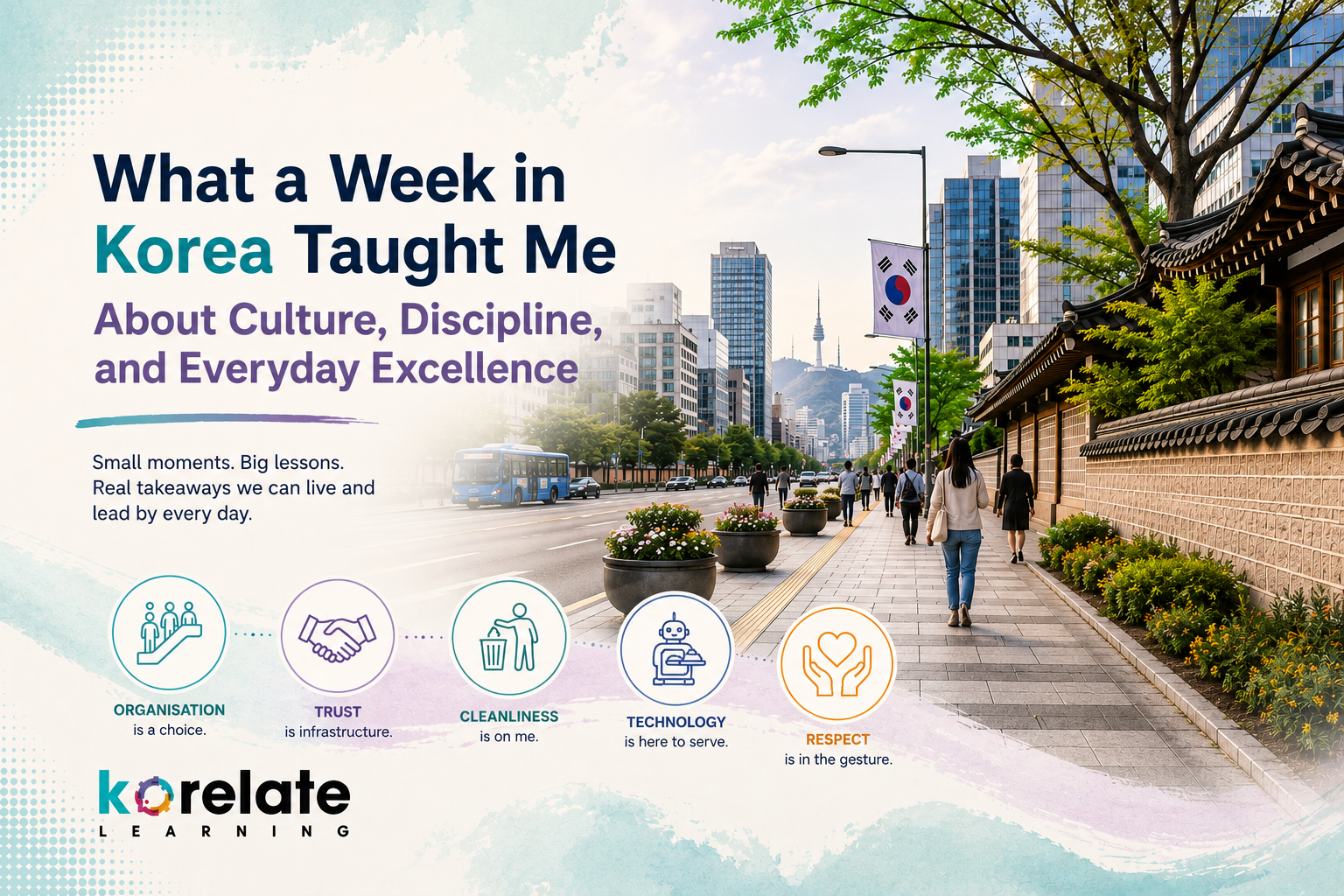
I’ll be honest. When I landed in Seoul, I wasn’t in deep observation mode. I was
hungry, jet-lagged, and extremely excited to eat my weight in Korean fried
chicken. What I did not expect was that some of the biggest takeaways from the
trip would come from simply observing how people live their daily lives.
Travel often teaches us things that no classroom, book, or workshop can.
Sometimes the most powerful lessons come from watching how ordinary people
behave when nobody is watching.
Throughout my trip, I found myself noticing small things that, when put together,
painted a picture of a society built on discipline, trust, and respect.
So here’s what I noticed, and honestly, what I think we can take back with us.
1. Being organised is not a personality type there. It's just how things are done.
The first thing that got me was the escalator. I know that sounds ridiculously
specific but bear with me. At one of the busiest metro stations in Seoul, during
what I can only describe as peak rush hour chaos, I watched people form a calm,
perfect single-file queue for the escalator. No one told them to. There was no sign,
no attendant, no announcement. They just did it.
And that wasn’t a one-off. The organisation was everywhere. In how people
walked, how spaces were maintained, how things were arranged. It wasn’t the
organised-because-someone-is-watching kind. It was the
organised-because-this-is-just-who-we-are kind.
What I took from this: we often treat being organised as optional, or as
something that depends on the environment around us. Korea reminded me that
organisation is a choice you make consistently until it stops feeling like a choice.
Personally and professionally, that’s worth sitting with.
2. Trust is not naive. It's infrastructure.
I walked into a small shop that had no one minding it. Products on the shelves, a
cashbox on the counter, and the implicit understanding that you’d pick what you
want and pay. I waited for a few minutes, looked around for a camera or a staff
member in the back, found neither, and just paid. Because that was clearly the
expectation.
This trust isn’t just touching, it’s functional. It means lower operational costs, less
friction, and a society that can run more smoothly because it’s not constantly
designing systems around the assumption that people will misbehave.
3. Cleanliness is personal responsibility, not someone else's job.
Here’s a fun puzzle I spent two days trying to solve: the streets in Seoul are immaculate, but public dustbins are genuinely hard to find. How? Because people take their trash home. That’s it. That’s the whole system. You made the mess, you handle the mess.
No one is walking around reminding people of this. No fines. No campaigns. It’s just deeply ingrained that your space and shared spaces are your responsibility.
Translate this to work or even to how we operate as individuals, and it becomes a
pretty sharp question. How often do we leave our metaphorical trash for someone
else to clean up? Unfinished tasks, vague communication, half-done handovers? Ownership, real ownership, looks a lot like carrying your own trash home.
4. Technology is there to serve you, not impress you.
I had a robot bring me food at a restaurant. I want to be very clear that I was not prepared for this, emotionally. It just wheeled over, presented the dish, and waited patiently while I figured out what to do. The staff were still there, still warm and helpful, but the robot handled the routine so the humans could focus on the parts that actually needed a human.
Korea’s relationship with technology was something else. It wasn’t about being flashy or futuristic for the sake of it. It was about asking where technology genuinely makes things better and letting it do that, without drama.
We spend a lot of time in our professional lives either resisting technology or
chasing it uncritically. The more useful question, one I think Korea implicitly
models really well, is simply: does this actually help? If yes, use it. If not, don’t
overthink it.
5. Respect is in the gesture, not just the words.
Every time someone handed me something at a store, whether it was my change,
a receipt, or a bag, they used both hands. Every single time. It’s a small cultural
gesture that signals: I see you, this matters, you matter. And I noticed how
different it felt to receive something that way versus having it sort of tossed in
your direction.
I also noticed how often people smiled at strangers on the street. Not a
performative, forced smile. Just a quiet acknowledgement of another person’s
existence.
It made me think about how much of our respect for people is genuine versus
habitual versus rushed. How we hand over a document in a meeting, how we
acknowledge a colleague’s contribution, how we greet someone we pass in the
corridor. These things read as small but they accumulate into how people feel
about being in a space with us.
So Where Does That Leave Us?
I’m not suggesting we all move to Seoul, though the food alone would make a
strong case. And I’m not saying Korea has everything figured out, because no
place does.
But what struck me most was how many of these qualities — organisation, trust,
ownership, purposeful use of technology, genuine respect, self-care, and
punctuality — are things we already know we want. We talk about them in
workshops. We put them in company values decks. We set personal goals around
them every January.
Korea showed me what it looks like when a society has quietly decided to just live
these things instead of talking about them. And the result isn’t perfect, but it is
noticeably different.
The gap between knowing and doing is where most of us live. The question Korea
left me with is a simple one: what would it take to close that gap, even just a little,
in how I show up every day?
I’m still working on my answer.
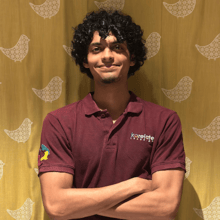
Kayden Coelho is a Co-Facilitator at Korelate Learning, known for his calm, dependable nature and effortless warmth. Always ready to lend a hand, Kayden brings steadiness and positivity to every task, ensuring that operations run smoothly and teams feel supported. His reliability and composed presence make him a true anchor within the team. Beyond work, Kayden’s love for dance and football keeps his energy high and his spirit grounded. Whether he’s moving to a beat or playing on the field, he embodies focus, rhythm, and teamwork. With his balanced mix of discipline and creativity, Kayden continues to make a quiet yet powerful impact at Korelate Learning — both as a teammate and as a person who inspires trust and connection.