Before 2020, most organizations believed team building needed physical spaces. Conference rooms. Outdoor setups. Resort offsites. Icebreakers with sticky notes and charts
Then suddenly, teams found themselves trying to collaborate through screens.
And that changed everything.
Not because virtual work made collaboration impossible, but because it exposed something most organizations had ignored for years: people were working together, but not necessarily connecting.
For fresh graduates entering the workplace, the shift became even harder. The transition from campus to corporate already comes with uncertainty. Add virtual onboarding, muted microphones, awkward silences, and back-to-back online meetings into the mix, and many employees never truly feel like part of a team.
That’s exactly why virtual experiential learning has become far more important than virtual “fun activities.”
At Korelate Learning, we’ve seen one format consistently change the energy of virtual teams: simulation-based team building experiences.
Unlike traditional online games where participation is optional and engagement fades after 15 minutes, these activities place teams inside challenges where communication directly impacts outcomes. Participants need to collaborate, think under pressure, solve problems, delegate responsibilities, and make decisions together in real time.
One of the biggest reasons these experiences work is because they don’t feel forced.
Nobody enjoys being asked to “share one interesting fact about yourself” on a Monday morning Zoom call. But place the same group inside a high-pressure virtual challenge where they need each other to succeed, and interaction becomes natural.
That’s where experiences like Virtual Activities by Korelate Learning create real impact. Instead of focusing only on entertainment, these sessions mirror actual workplace dynamics while keeping participants fully engaged.
What makes these activities especially powerful for campus-to-corporate programs is that they reveal behaviors traditional training sessions often miss.
- Who takes initiative when time is running out?
- Who listens carefully before reacting?
- Who naturally includes quieter teammates in discussions?
- Who focuses only on individual success instead of team outcomes?
These are the same collaboration challenges organizations deal with every day, just compressed into a 60-minute virtual experience.
And interestingly, virtual environments often accelerate learning.
In physical workshops, people can rely heavily on presence and personality. Online, communication becomes more intentional. Teams need clarity, structure, active listening, and trust to function effectively. Which is exactly why thoughtfully designed virtual activities often reveal more about collaboration than offline sessions do.
The conversation today should no longer be about whether virtual team building “works.”
The better question is this:
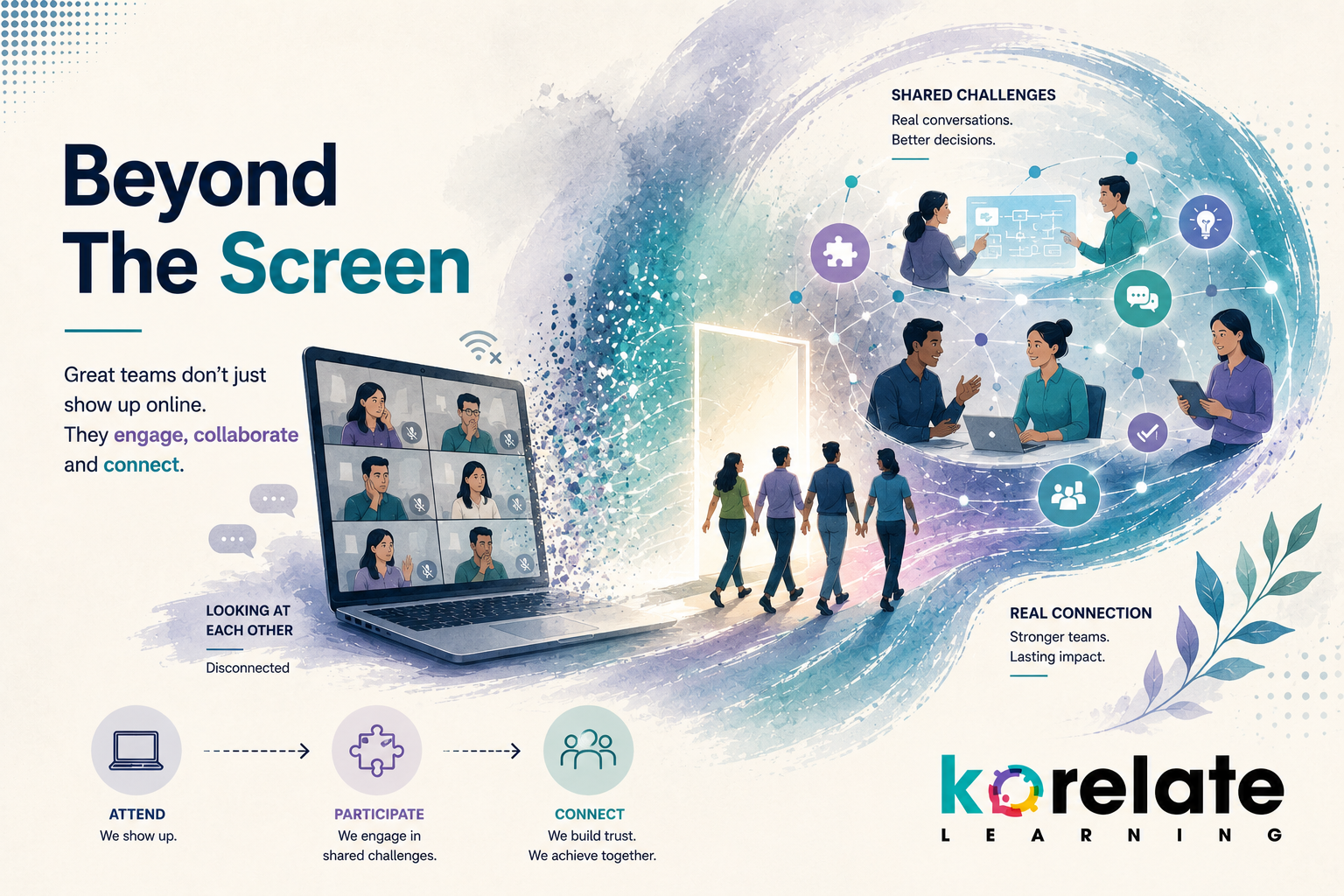
Are we creating online experiences that people simply attend, or experiences they genuinely participate in?
Because there’s a big difference.
At Korelate Learning, virtual experiential learning is designed to go beyond engagement for the sake of engagement. The objective is not just to make teams interact for an hour, it’s to help them communicate, collaborate, and connect long after the session ends.

Kanak is the Client Success Advisor and Marketing Manager at Korelate Learning, where she blends strategy, creativity, and empathy to craft impactful client and brand experiences. With a keen understanding of people and performance, she ensures every engagement delivers value and meaning — for clients, teams, and learners alike. Known for her energy, collaboration, and heart-led approach, Kanak brings both strategy and soul to everything she does. Outside of work, she finds joy in sports, travel, and discovering new ways to bring people together.