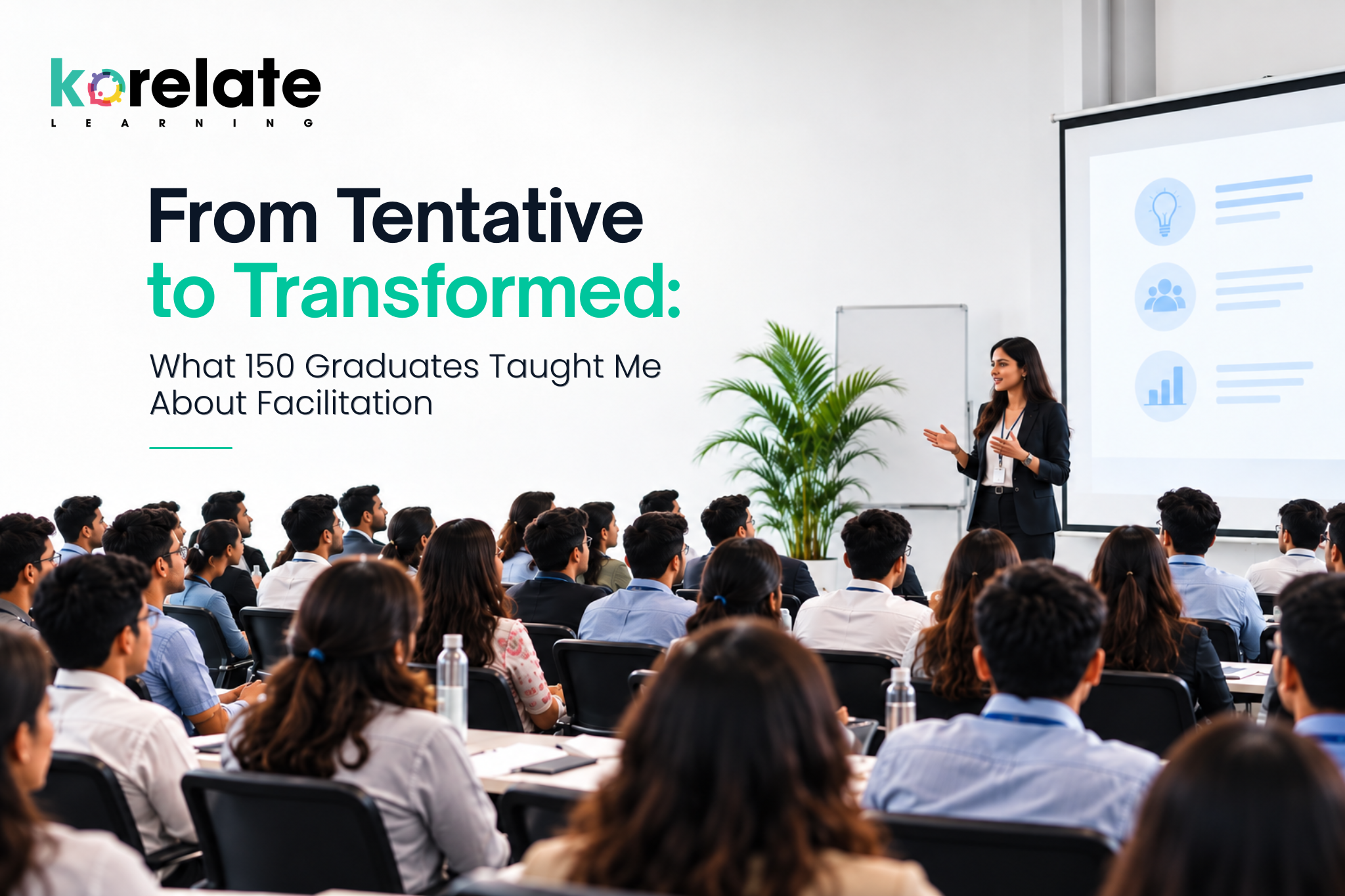
On Day 1, they wouldn’t look up.
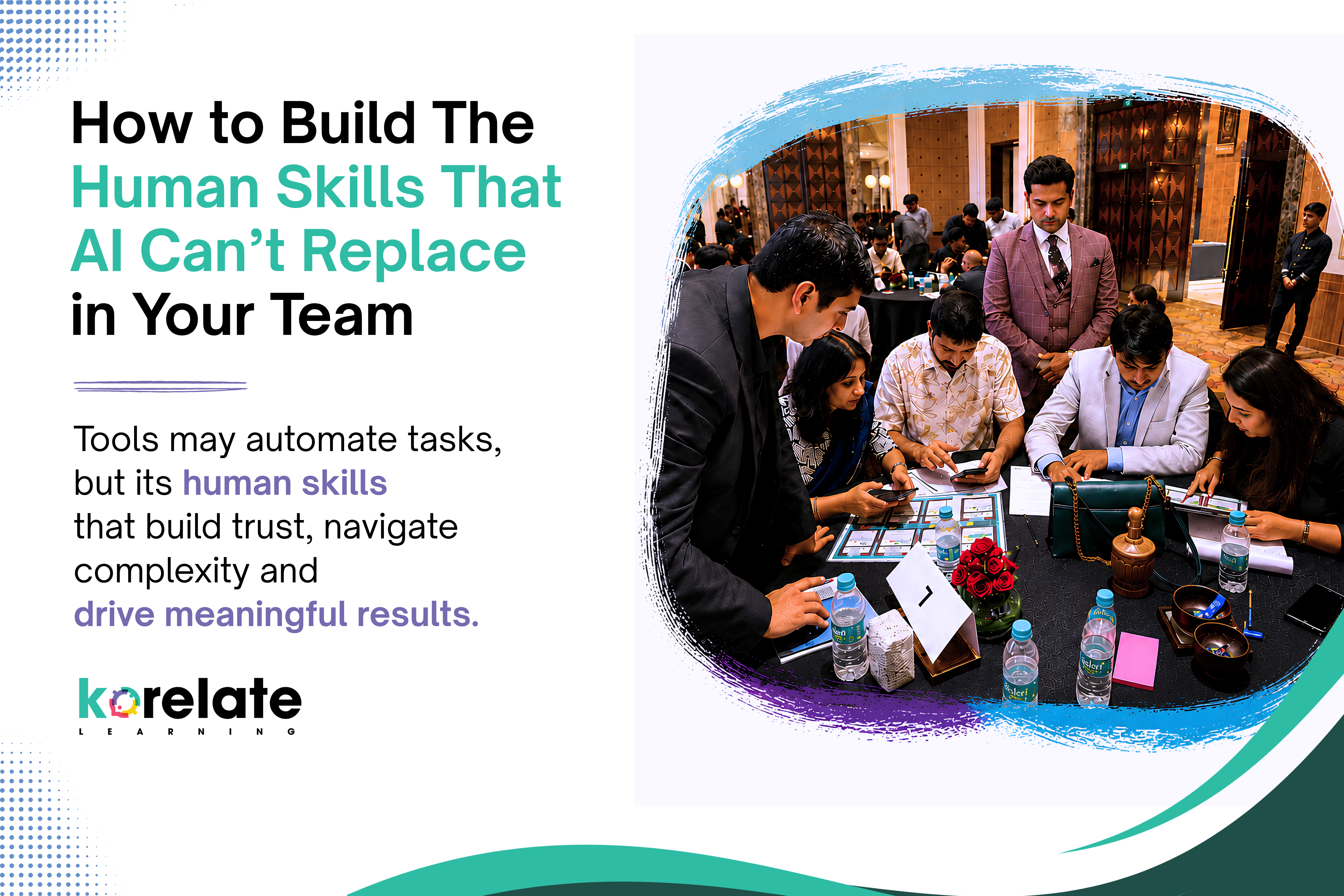
One hundred and fifty fresh graduates filed into the room for a five-day Campus to Corporate program that we at Korelate Learning ran for a leading international bank, bright, qualified, and quietly terrified. You could feel it: the folded arms, the fixed stares at the table, the silence that wasn’t calm but braced. Underneath the polish sat the questions every new joiner carries but rarely says aloud. What do they think of me? How do I approach people? Am I even good enough to be here? Imposter syndrome had arrived before they did.
Here is what I have learned after many rooms like this: you don’t lecture people out of that feeling. You facilitate them out of it. And the first move isn’t a slide, it’s you.
You go first. If I want them to take risks, I have to model that it’s safe. So I own my own mistakes out loud, a mispronounced name, a fumbled example, a “you know what, I got that wrong, let’s redo it.” The room exhales. If the person at the front can be imperfect and still be respected, maybe they can too.
You do what you preach. We spent Day 3 on critical thinking and Day 4 on trust and collaboration, but credibility isn’t built on the slide, it’s built in the small things. Coming back from breaks on time, every time. Not disappearing during those breaks, but standing with them, asking about their weekend, their hometown, their nerves. Trust is a thousand tiny deposits, and most of them happen when the “session” isn’t running.
You speak their language. This is true for any session, but it’s non-negotiable in a corporate one. Before Day 1, we did the homework, how this organisation talks, what it values, its purpose of being genuinely customer-centric. When your examples sound like their world, they lean in. When they sound generic, they check out.
You let humour do the heavy lifting. New graduates brace for something dry and serious, so we did the opposite. We opened every day with icebreakers, cracked jokes, and, yes, pulled a few legs. When a facilitator can laugh at themselves and tease gently, permission ripples outward: soon they’re ribbing each other, laughing at their own missteps, and relaxing into the room. Because play is not the enemy of learning, it’s the doorway to it. People open up when they’re laughing, not when they’re being impressed. So we translated big ideas into simple ones, wrapped the corporate world in stories instead of jargon, and kept it lighter than they expected. The goal each day was the same: get them talking, get them up, get them doing before being told.
And we brought AI in as a thinking partner, not a crutch. On the problem-solving day, teams first did the human work, framing the real problem, naming their assumptions, before opening any AI tool. Then they used AI to challenge their thinking: what are we missing? what’s the strongest argument against us? The lesson landed hard: AI can expand your thinking, but it shouldn’t replace it. For a generation anxious about their relevance in an AI world, that reframe was quietly empowering.
Then the week did its work.
Slowly, the arms unfolded. The quiet ones volunteered. By Day 4, teams that had barely spoken were negotiating, debating, laughing, pitching. The transformation wasn’t magic, it was accumulation. Each activity that ended in a small win became evidence: I can do this. My voice is worth hearing.
The moment I’ll keep came at the end. A graduate walked up, one who hadn’t said a word on Day 1, and said, “On the first day, I couldn’t imagine speaking in front of everyone. Now I can.” That’s the whole job, right there.
We didn’t make them confident by telling them to be confident. We built a room safe enough to be honest in, modelled the courage we asked for, and let them discover, over five days of doing, that they were capable all along.
They walked in tentative. They walked out ready. And honestly? So did I.
Curious how we help fresh graduates make the leap from campus to corporate? Explore Korelate Learning’s Campus to Corporate induction workshops.

Siddharth is the Co-Founder of Korelate Learning, where he designs experiential learning programs that go beyond fun to build trust, leadership, and alignment within teams. With over 14 years in the L&D space—across facilitation, business development, and leadership—he brings deep expertise in purpose-led team building, MBTI-based psychometrics, and customized leadership journeys.