Have you ever had something to say but decided to keep it to yourself because you weren’t sure how it would be received?
Maybe it was a question you were hesitant to ask, an opinion you weren’t sure you should share, or feedback you chose to hold back because you didn’t want to make things awkward.
I’ve been there too. And over time, I’ve realised that sometimes, the hardest part of being open isn’t knowing what to say. It’s finding the courage to say it.
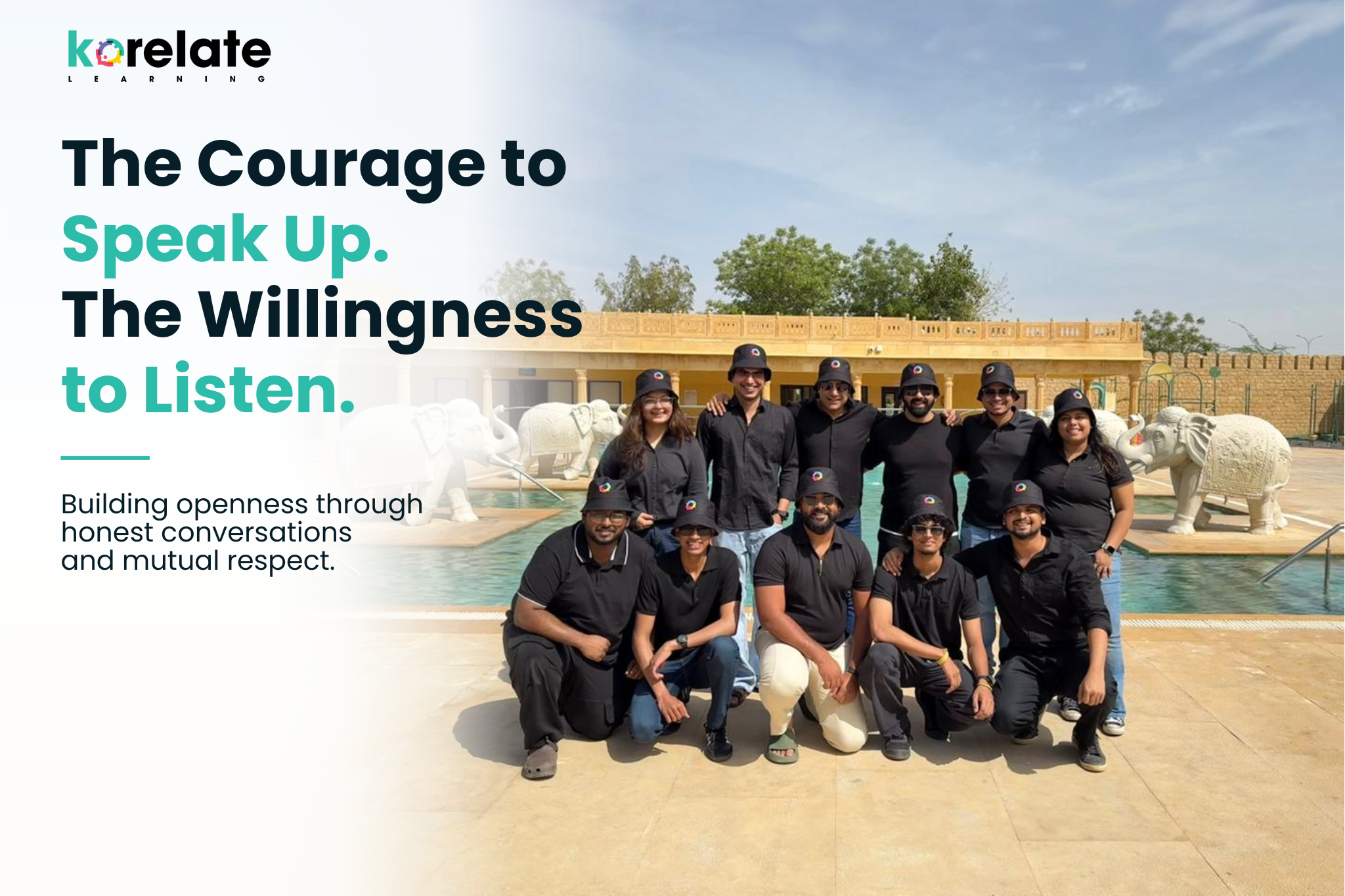
At Korelate, we have four values that we try to live by every day. K stands for Kindness, O stands for Open, R stands for Reliable, and E stands for Enthusiasm. Being open is a value that I apply to nearly everything I do as a CX. Being open is being truthful, asking questions, sharing ideas, and being willing to understand things from another person’s point of view, whether I’m working with a client, a colleague, or a facilitator.
Being open can be uncomfortable at times, despite what appears to be simple. There’s always a concern of how something might be perceived by others or whether expressing your true feelings will make things awkward. Although it may seem easier to remain silent and move on, that does not always mean that the problem has been resolved. Keeping things to yourself may sometimes end up in assumptions that are incorrect, lost chances, or issues that could have been resolved much sooner.
Learning to Share What I Think
I was really hesitant to express my opinions when I initially started in my role. Because I didn’t know how things would turn out, I would often have remarks or opinions but decide to keep them to myself. It seemed safer to be silent because I didn’t want to say the wrong thing or make things awkward.
As time went on, I recognised that neither I nor the people who I was working with were benefiting from this approach. As I grew more comfortable expressing my opinions, I observed that discussions got more productive and that some circumstances became much simpler to handle. I learned that it’s not necessary to go up against someone in order to speak up. It can simply mean bringing something to the table that may not have been considered before.
But I also realised that becoming comfortable with being open was not something I did entirely on my own. My team played a big role in making that happen. Over time, I found it easier to ask questions, share my thoughts and express a different point of view without feeling like I had to get everything right. Having people who were willing to listen and understand where I was coming from made a difference.
I realised that when the people around you make an effort to listen, you slowly become more comfortable sharing what you think. You stop overthinking every question or worrying about whether your opinion will be welcomed. You begin to understand that speaking up is not necessarily about challenging someone. It can simply be about helping everyone see things a little differently.
Making Openness a Two Way Street
The biggest lesson for me has been that being open works both ways. If I want people to be comfortable sharing their thoughts with me, I also need to create that space for them. That means listening without immediately judging, being willing to accept feedback and recognising that my perspective is not the only one.
Of course, there are still moments when being open feels difficult, especially when the conversation is uncomfortable or the feedback is hard to hear. But I’ve discovered that those discussions frequently result in better understanding and outcomes. More significantly, being open has taught me to be curious, open minded, and eager to learn. It has also given me a greater sense of confidence when expressing myself.
My experience has also made me realise how important the work environment is in encouraging openness. We often tell people to speak up, ask questions and share their ideas, but we also need to think about whether the environment around them makes it easy to do so. People are more likely to express themselves when they know they will be heard and respected, even when their opinions differ from everyone else’s.
I believe this is something more organisations should consciously work towards. Creating an open culture does not mean that everyone has to agree with one another. It means allowing people to have honest conversations, ask questions without hesitation, give feedback without fear and learn from different perspectives. Sometimes, all it takes is a team that listens without jumping to conclusions or a colleague who makes you feel comfortable enough to say what is on your mind.
For me, the O in KORE is not about always having something to say. It is about having the courage to speak when it matters and the openness to listen when someone else does. Sometimes, the first step towards building an open workplace is simply making someone feel that it is okay to speak their mind.

Racheal is a Customer Experience Specialist at Korelate Learning, where she blends empathy, organization, and communication to create seamless and positive client experiences. With a background in Business Development and Operations Management from Seneca Polytechnic, she ensures every interaction is thoughtful, efficient, and people-centered. Known for her approachable nature and attention to detail, Racheal takes pride in making every engagement meaningful. Outside of work, she enjoys traveling, exploring new cuisines, and discovering cultures that bring people together.