My thinking around team-building has shifted quite a bit over the last couple of years and I think it’s worth sharing how that happened.
Back in college, any kind of group engagement was about one thing – fun. If people were laughing, participating, and leaving with a good memory, that was success. No one was asking deeper questions. We weren’t supposed to.
Then I moved into the corporate world and started facilitating learning workshops, and something changed. The activity was still fun, still engaging. But I began to notice what happened after. When we would sit down as a group and talk about what just occurred, something would shift in the room. I could see it on people’s faces — a kind of recognition. And I realised that the real difference wasn’t being made during the activity. It was being made in that conversation after it.
That shift — from campus energy to corporate depth — taught me that team-building can be a lot more than just an activity. It can create lasting change in the lives of individuals, if we let it. And the bridge between the two is reflection.
Now, after years of being part of team-building sessions, running team challenges, and working with different groups, I’ve come to see one thing very clearly.
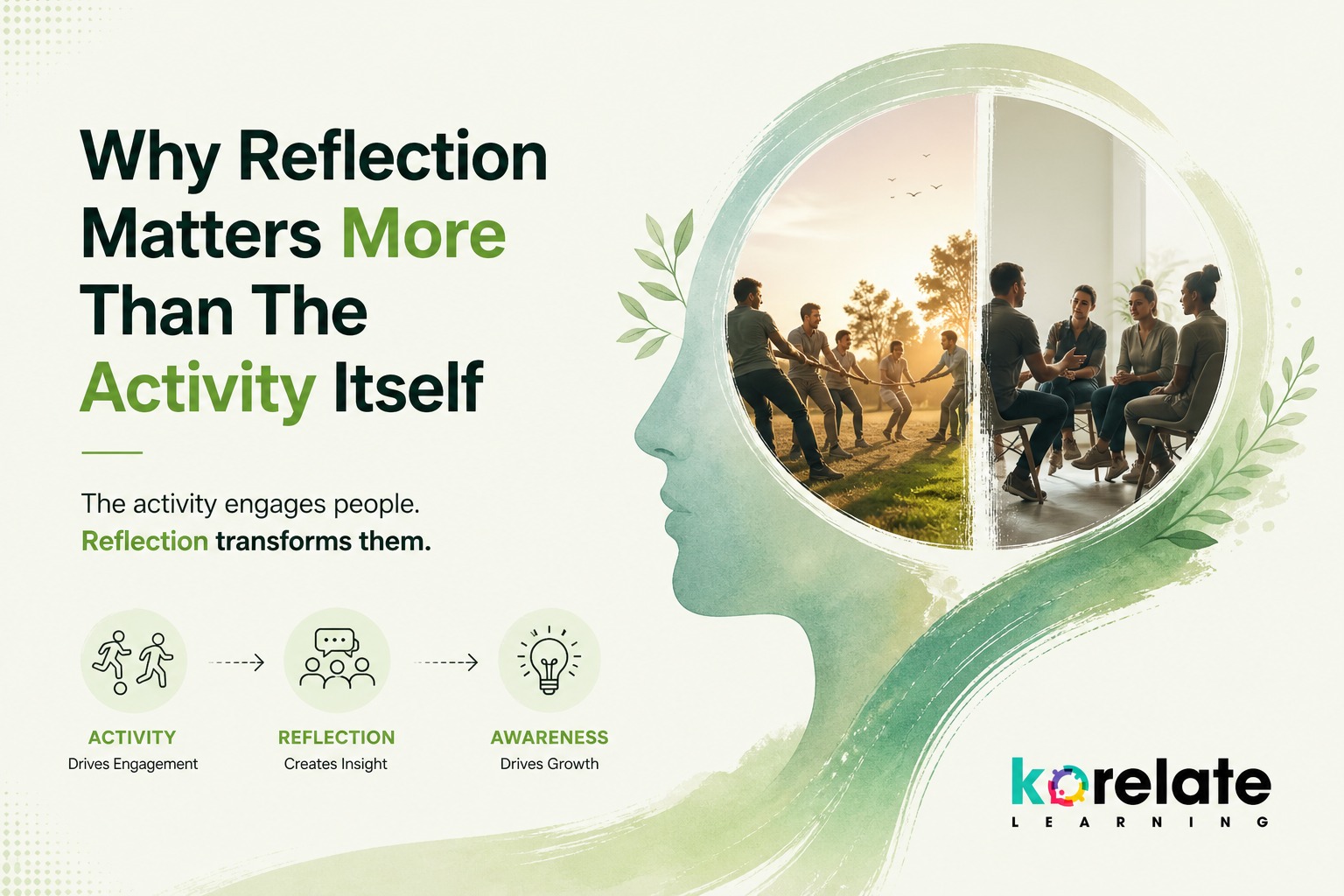
The activity is not the most important part.
It’s the reflection.
And honestly, the room would light up. People would participate. They would compete. They would laugh. The vibe would be great.
But after a few sessions, I started asking myself, did anything actually change?
That question shifted everything for me.
Because an activity can create excitement. Yes, it’s fun, highly competitive, and engaging but excitement fades. What stays is insight.
If you look closely, every activity reveals something. The behaviour of each individual in the session — who steps up as a leader, who stays quiet, how decisions are made, whether the team truly listens or just reacts, how people behave under pressure.
Most of the time, people don’t notice these patterns while they’re in the middle of it.
But when we slow down and reflect, that’s when it clicks.
Someone realises they interrupted others.
Someone notices they avoided conflict.
A team recognises they rushed into action without clarity.
That moment of awareness is small — but it’s powerful. Because it reveals why we react a certain way and how it impacts our team.
I’ve learned that the most impactful part of any session is usually the quietest part — the five or ten minutes after the activity, when the room shifts from noise to thinking.
That’s when people connect the dots between the game they just played and the meetings they have every Monday.
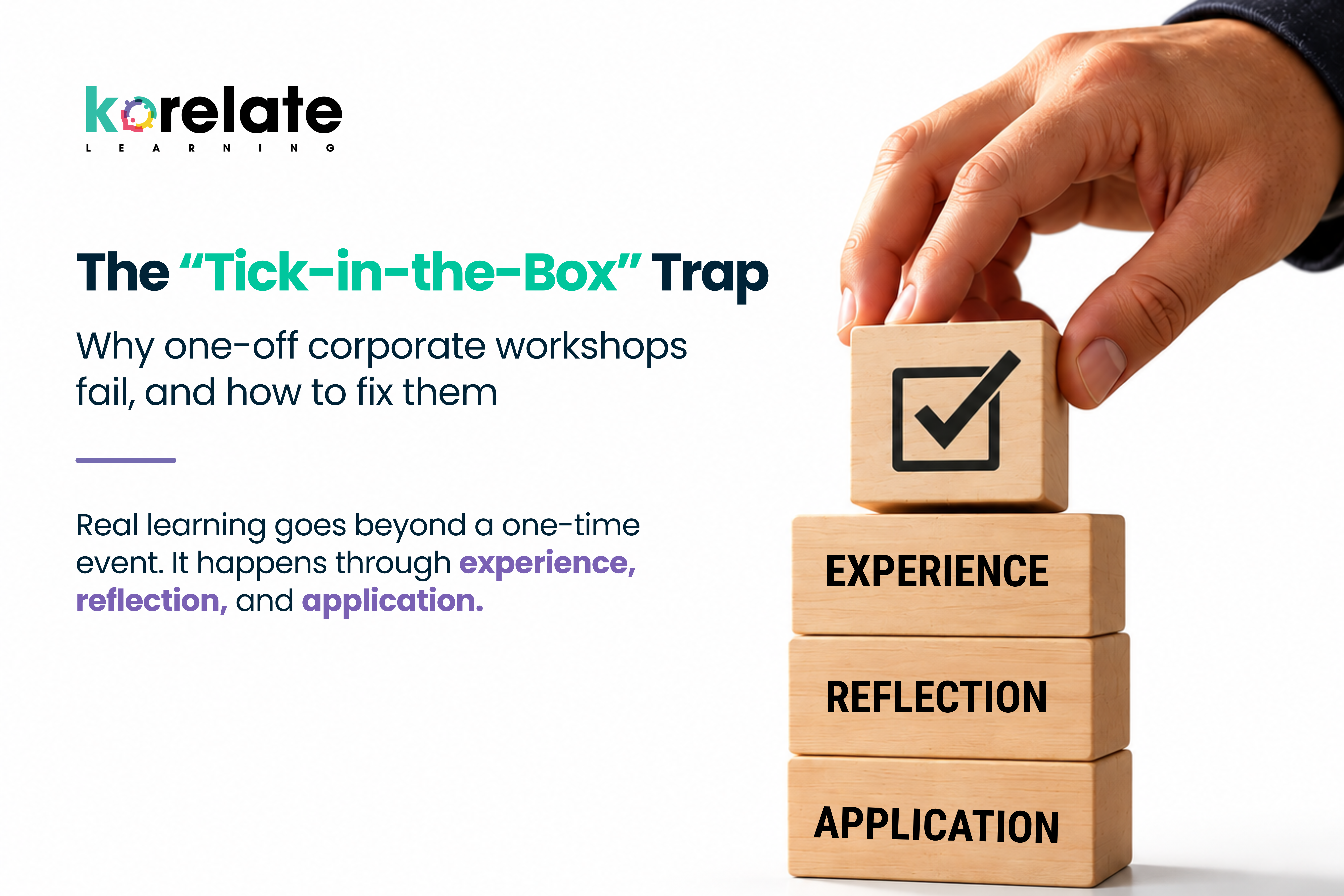
Without reflection, an activity is just a good experience. With reflection, it becomes a lesson.
I don’t think teams need more activities. They need more honest conversations about what those activities reveal.
For us, the goal isn’t just to run something engaging. It’s to help people see themselves more clearly. Because once you see your patterns, you can’t unsee them.
The activity gets people involved, but reflection helps them grow.
And real growth always starts with awareness

Avadhut is a Co-Facilitator at Korelate Learning with a background in HR recruitment and a passion for building high-performance teams.
He is also a creative enthusiast skilled in photography, videography, and music, and enjoys football, DJing, and producing music.
Rooted in Mumbai with strong family ties, he brings energy, curiosity, and creativity to his work and life.